From The London Film Review:
Click here to see the rest of the list.
From The Province:
Director Steven Spielberg’s political backroom history tale Lincoln and David Cronenberg’s New York limo odyssey Cosmopolis have emerged as this year’s front-runners as the Vancouver Film Critics Circle narrowed its short list for the year’s best international and Canadian movies.
…
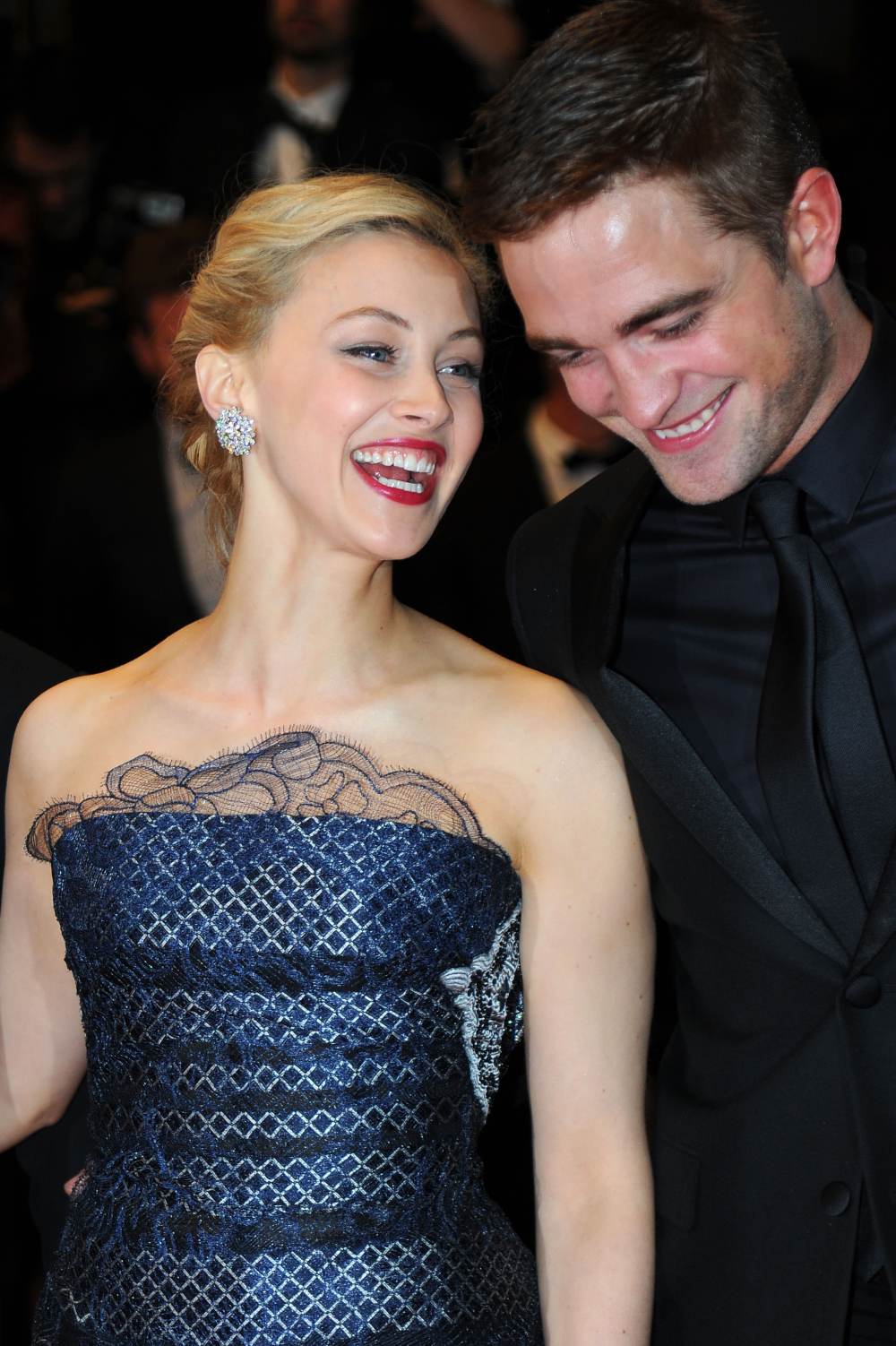
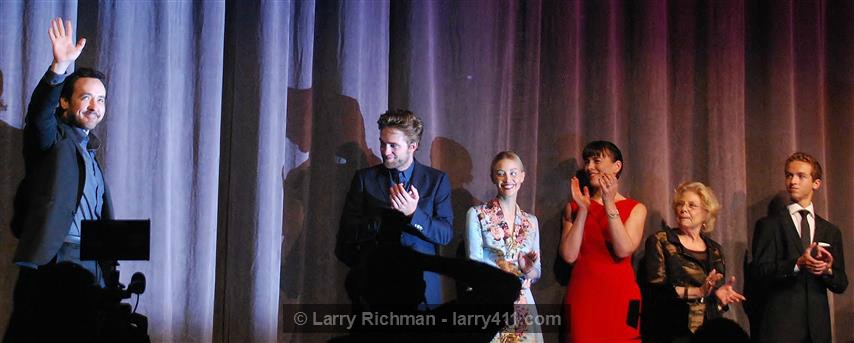
Canadian director Cronenberg’s Cosmopolis leads the home-grown competition with four nominations: best Canadian film, best director, best actor for Robert Pattinson, and two best supporting actress nominations, for Sarah Gadon and Samantha Morton.
The Vancouver critics, drawn from radio, TV, newspaper and online outlets, hand out their awards Jan. 7.
….
Joining Pattinson as nominees for best actor in a Canadian film are: Melvil Poupaud for the gender-issues drama Laurence Anyways; Michael Rogers for the B.C.-filmed sci-fi drama Beyond the Black Rainbow.
….
Joining Cronenberg as nominees for best director of a Canadian film: Panos Cosmatos, Beyond the Black Rainbow; Sarah Polley, Stories We Tell.
Read the full article here.
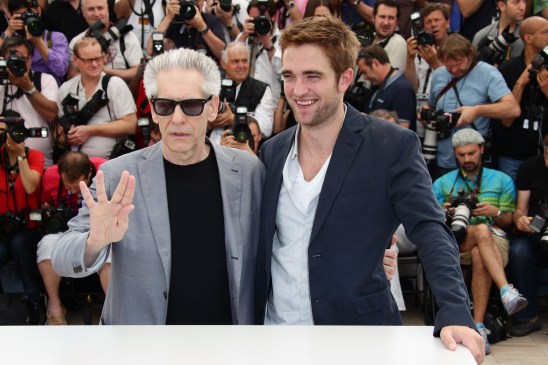
Twilight vamp Robert Pattinson plays a bloodsucker of an altogether different kind – the Wall Street kind – in his new movie Cosmopolis, on Blu-ray and DVD New Year’s Day, and the film’s director David Cronenberg tells ETonline that he was actually quite impressed with what Rob brought to the table, and that after the baggage of casting — once you get to that point when you’re on set and cameras are rolling – “Twilight is irrelevant.”
“He surprised me every day with good stuff,” says Cronenberg. “I don’t do rehearsals, and I try not to shape the actor’s performance at first. I want to see what his intuition is going to deliver. And then if there’s a problem then I start to shape it, nudge it, manipulate it a little bit. I did very little of that with Rob.”
Based on the novel by Don DeLillo, Cosmopolis follows one day in the wild life of multi-billionaire asset manager Eric Packer, who travels aimlessly through the streets of New York City in his limousine while conducting investment trading from the back seat. As the day progresses, it devolves into an odyssey with a cast of characters that start to tear his world apart.
“He absolutely would say to you right now, ‘I had no idea what I was doing at any time,’ and he would mean it,” says the veteran director of Rob’s performance. “I think he really didn’t realize how good he was. … He was surprising himself, but he was surprising me by his accuracy. It was just dead on. I mean, by the end of it we were doing one take. Honestly the whole last scene, the whole last shot in the movie with him and Paul [Giamatti] — one take. And it’s a long take as well. And it’s very emotional, and very subtle. One take for both of them, it was so good. … In fact, we finished the shoot five days early, and a lot of that was due to Rob.”
Of course, when Cronenberg first cast Rob, he had to overcome what he calls Twilight “baggage,” explaining, “You often have to consider what we call baggage for an actor, and you have to decide whether it’s a problem or not. I hate the idea of it because I know I’m going to be on the set with the guy at three in the morning shooting in the streets of Toronto, and none of that stuff is relevant. We’re just two people trying to make the movie work. So his past performances, or his fame, or lack of it, or whatever the factor is, is at that point irrelevant. What’s relevant only is what we can do creatively with each other.
“On the other hand, when you’re financing a movie you have to have lead actors who have some weight and some substance and will attract investors so that you can get your movie financed, so it’s a weird situation,” he continues. “Aside from the fact that yes, he was an exciting and interesting, surprising choice in terms of how investors viewed it — and it worked because we got the financing for the movie — after that Twilight is irrelevant, you know?”
What mattered most to Cronenberg was that his lead could carry the scene and had the proper charisma: “It starts very simply with is he the right age, does he have the right look, does he have the right presence onscreen?” he says. “He is in absolutely every scene in the movie, and that’s really quite rare. Even in a movie with Tom Cruise, you don’t see Tom in every scene. But in this case you do, and so he has to have some charisma. You have to want to watch him for that long and that intensely, because I knew I was going to be crawling all over his face with the camera.”
Of course, it wouldn’t be a David Cronenberg film without a little oral or anal fixation – themes prominently placed in such films of his as Naked Lunch, Dead Ringers and Videodrome – and there’s an especially amusing scene during Cosmopolis in which Rob gets examined by a doctor in his limo and discovers that he has an “asymmetrical prostate.”
“Orifices are the entry and exit of our bodies, and that really talks about identity and where the boundaries of an individual identity end and where the environment begins,” says a straight-faced Cronenberg, adding with a laugh, “I could do an academic analysis of my own movies, but that wouldn’t help me create [my new] movies. … You could do that analysis and make those connections amongst the movies, and you’d be correct.”
A lot has been said about your unconventional choice of Robert Pattinson for the lead role.
The thing I liked about Rob Pattinson as an actor is that he’s a serious actor. And you could lose sight of that, because he’s had this big popular success with the Twilight movies, but he is not afraid to play a character who is difficult to like, you know, because some actors are afraid to do that, because they feel it is too personal, that they themselves will not be liked by their audience, and so on. But a real actor is not afraid to play an unsympathetic character, and Rob is a real actor.
Also, I think to be an actor, you need intelligence, first of all. For example, Rob immediately realised that the script was quite funny, and most people don’t get that. Then you want sensitivity to the subtleties of the movie, in terms of what is going on in the movie, the dialogue and so on. And Rob, personally, is very knowledgeable about cinema.
(chuckles) I don’t think his Twilight fans realise this about him, but he’s really an aficionado about art cinema. I mean, on the set I’d find him talking to Juliette Binoche about obscure French cinema, (chuckles) so you know, he brings a real depth of understanding of the history and art of cinema and all of those things mean that you have a lot of power and a lot of responsiveness from your actor as a director. It’s like driving the Ferrari instead of driving, you know, a Volkwagen Beetle. And you get that with Rob. I must also add, he’s very down to earth and very easy to work with. He’s not diva at all, you know. He’s really a sweetheart.
Read David’s full interview at the source | Via | via RPLife
Do you like this selection? Check out the full slate below courtesy of Film Detail.
“Sight & Sound” Best Of 2012
1. The Master (Paul Thomas Anderson, USA) (review)
2. Tabu (Miguel Gomes, Portugal/Germany/France) (review)
3. Amour (Michael Haneke, France/Germany/Austria) (review)
4. Holy Motors (Leos Carax, France/Germany) (review)
5. Beasts of the Southern Wild (Benh Zeitlin, USA) (review)
= Berberian Sound Studio (Peter Strickland, UK/Germany) (review)
7. Moonrise Kingdom (Wes Anderson, USA) (review)
8. Beyond the Hills (Christian Mungiu, Romania/France/Belgium) (review)
= Cosmopolis (David Cronenberg, Canada/France/Portugal/Italy) (review)
= Once Upon a Time in Anatolia (Nuri Bilge Ceylan, Turkey/Bosnia & Herzegovina) (review)
= This is Not A Film (Jafar Pahani & Mojtaba Mirtahmaseb, Iran) (review)
Here are some great Cosmopolis reviews by The Cult Den, Filmblerg and Static Mass Emporium
From The Cult Den
‘Cosmopolis’ proves to be an outstanding and unflinching depiction of the current climate. The character of Eric Packer almost serves as a modern day martyr. His overwhelming sense of isolation from the real world or the growing disillusionment that comes with being wealthy, he seems relentless in his pursuit to reject any association with such a fatally mundane lifestyle.
In a real game changing role, Pattinson delivers his most accomplished and assured performance to date. Anchoring the film with meticulous poise and charisma, his thoroughly engaging protagonist here may finally put the doubters to rest in regards his acting abilities.
Cronenberg certainly hasn’t opted for the ‘hack and slash’ approach here either in his interpretation of Delillo’s work. The tongue twisting lengthy segments of dialogue literally torn from the pages are daringly faithful. The uninitiated perhaps will be left dumbfounded by the bamboozling of such intelligent jargon, others will find it refreshing and mesmerising. Whilst his directorial style remains intimate and precise, he certainly doesn’t shy away from the visual metaphors either. A particular highlight involving Pattinson facing up to Paul Giamatti’s antagonist Benno Levin, framed exquisitely within a wide angle shot emphasising the ever growing class divide between the rich and a disgruntled working class.
Overwhelming in its deconstruction of so many subject matters, it’s certainly too unusual and talky for the mainstream. For the more open-minded among us however, ‘Cosmopolis’ is an engrossing piece of cinema saturated in social resonance and intellect that deserves its intricacies to be deciphered.
From Static Mass Emporium
The very best films, the ones we tend to really love, inspire a blend of enjoyment and admiration. We feel the thrills of the plot whilst enjoying the acting, or the camerawork. In addition to this we’re often able to relate to the core values of the piece; extrapolating, correctly or not, the filmmaker’s themes and objectives. Their point. On occasion, however, a film’s creditsroll up the screen and we find ourselves confounded by something that was utterly engrossing, but at the same time, bewildering. And so to Cosmopolis.
Fully embracing the style of the source material, Cosmopolis is an utterly distancing and at times, plain weird affair. Whether this is in its sharp visuals, its stilted and strange dialogue delivery, its vignette structure, its purposely unrealistic CGI or its obscured meanings, we’re not being pulled in but forced away. This really struck me throughout both viewings and is, I think, central to setting up the character of Eric Packer right from the start.
Disguised behind his dark glasses, and spouting esoteric pseudo-intellectual philosophy, Robert Pattinson is magnetic as the young billionaire (much to my surprise). As he spends his day in the car, we’re shown a portrait of a man that’s distanced himself from reality. He inhabits a plain of existence where people don’t behave like those others on the street and as such represents the very likely disconnect between the 1% and the real world. Where we normally empathise with a protagonist because we understand what they feel, here Cronenberg wants the opposite; he’s trying to engender in us Eric’s sense of not feeling. We’re not necessarily supposed to get what he’s talking about when he asks questions like “But what happens to all the stretch limousines that prowl the throbbing city all day long? Where do they spend the night?”
There’s doubtless an awful lot more than can be said about Cosmopolis (even in this piece of mentioned things I’ve not been able to explore further), and I’m sure that there are myriad other, equally interesting readings of what it’s all about. All I know is that whilst it’s by no means prefect, it’s utterly spellbinding and I’m thoroughly looking forward to reading DeLillo’s book. Once that’s done, I can have another, more informed, crack at Cronenberg’s beguiling film and see if I can’t take even more meaning from it.
From Filmblerg
The revolt against Packer manifests in three forms. The first is a semi-violent protest of countless anarchists with a rat idol but, although replete with suicide, it is unable to penetrate his limousine. The second is that of art, in a bizarre scene of humiliation by a renegade pastry chef. It is a more memorable effort but the vandal’s desperate need to preserve and reproduce his one idea is unimpressive. Finally, there is the threat of assassination by an individual (Paul Giamatti) but it is merely the last cry of the lonely vengeful psychopath who wants nothing but to be noticed, his name remembered – but we never knew his name in the first place.
David Cronenberg has not independently authored a screenplay since Crash, and here with Cosmopolis, he retires the same theology of man and machine that he has so uniquely made his life’s work. Few directors could ever claim such transcendence. In Crash, previously the peak of Cronenberg’s artistic machinations, his characters are sustained by a sexual energy that can be harnessed through involvement in car accidents. Packer, however, is unmoved by the extremes of physical or sexual experience. He is unable to experience – as all knowledge is secondhand – his (our) world is devoid of new feeling or original thought.
Cosmopolis is revolutionary, even if it implies the futility of revolution. Capitalism is referred to as a “spectre” as it cannot be admonished with the reprimand of its benefactors. The phrase “a spectre haunts this world, the spectre of capitalism” is, in itself, a projection but it suggests something less ephemeral; it is that which can be digitised, mobilised, and gentrified – it is actually man’s artifice of eternity. Although promoted as an odyssey of war, violence and sex, the film’s terror is in its inactivity, it’s unresponsive, unflinching inertness. It is surely 2012’s apocalyptic masterpiece.
Were you happy with how Cosmopolis was received?
No, I would’ve liked it to have made half a billion dollars at the box office! [laughs] The movie was received like an art film, which is to say it did OK in the big cities. Naturally you always want the biggest audience you can get, just as long as it doesn’t cause you to compromise your moviemaking.
Why did you cast Robert Pattinson as limo-riding antihero Eric Packer?
Eric is in absolutely every scene, so you need an actor who is interesting and charismatic enough to look at for the entire movie. You want someone who can really come up with surprises and angles, and has a level of stardom that will support the movie. He also had to do a credible New York accent. All of that led me to Rob.
From The Filmstage
Breathe another sigh of relief, for David Cronenberg is assembling his next film. As was reported just when Cosmopolis had a world premiere, Canada’s best-known cinematic artist is making another endeavor with that film’s star, Robert Pattinson, and his newest favorite collaborator,Viggo Mortensen, on a Hollywood satire called Maps to the Stars. Already good, right? Well, there’s even more too add.
French site Allocine report that Rachel Weisz is now the cast’s third member — who, however, it has not been said — while a production start is being eyed for next May. Described as “very acerbic and satirical” by Cronenberg himself, Maps to the Stars, from what we understand, is a Bruce Wagner-scripted film which revolves around actors and agents, with a specific focus on “two child actors ruined by Hollywood’s depravity.” This central content, no matter if what we’ve heard is even true, has made this a difficult-to-implement project — movement actually began in early 2006, for instance — but when you get (for lack of a better term) stars in line, it can fall together. Respected producer Saïd Ben Saïd doesn’t hurt, either.
They’re good stars, too. Cronenberg has already shown an ability to coax wonderful and unexpected performances fromMaps‘ male stars, while, on the other side of the gender coin, I think Weisz has already secured her own image. It’s still a little while off until cameras begin rolling here, but the news should be coming in on and off for the next six months. Tune in, because I think this has a chance of being something special.
Saïd Ben Saïd will be producing.